I WANT TO TELL YOU ABOUT MY BODY
I Want To Tell You About My Body is the working title for a collection of drawings I began a few years ago while I was still in college. At the time, I was taking a class on graphic narratives, and was fascinated by the many ways words and images (or images alone) could be juxtaposed to create stories. I was also recovering from a serious eating disorder, which occupied most of my time outside the classroom. As a way to both process and motivate this recovery, I felt compelled to draw my own narrative.
Below is a sample of the forthcoming book, I Want To Tell You About My Body.

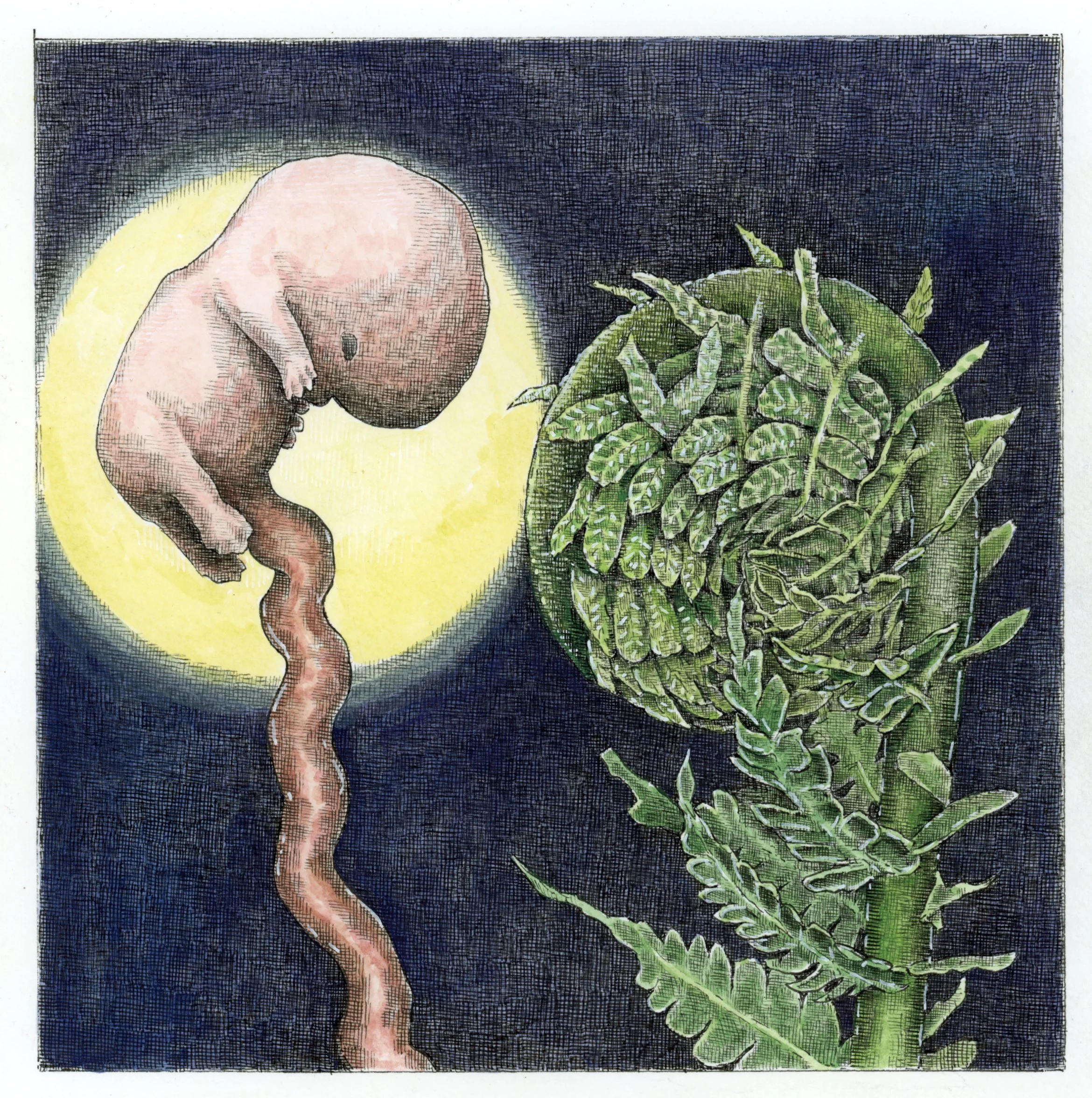
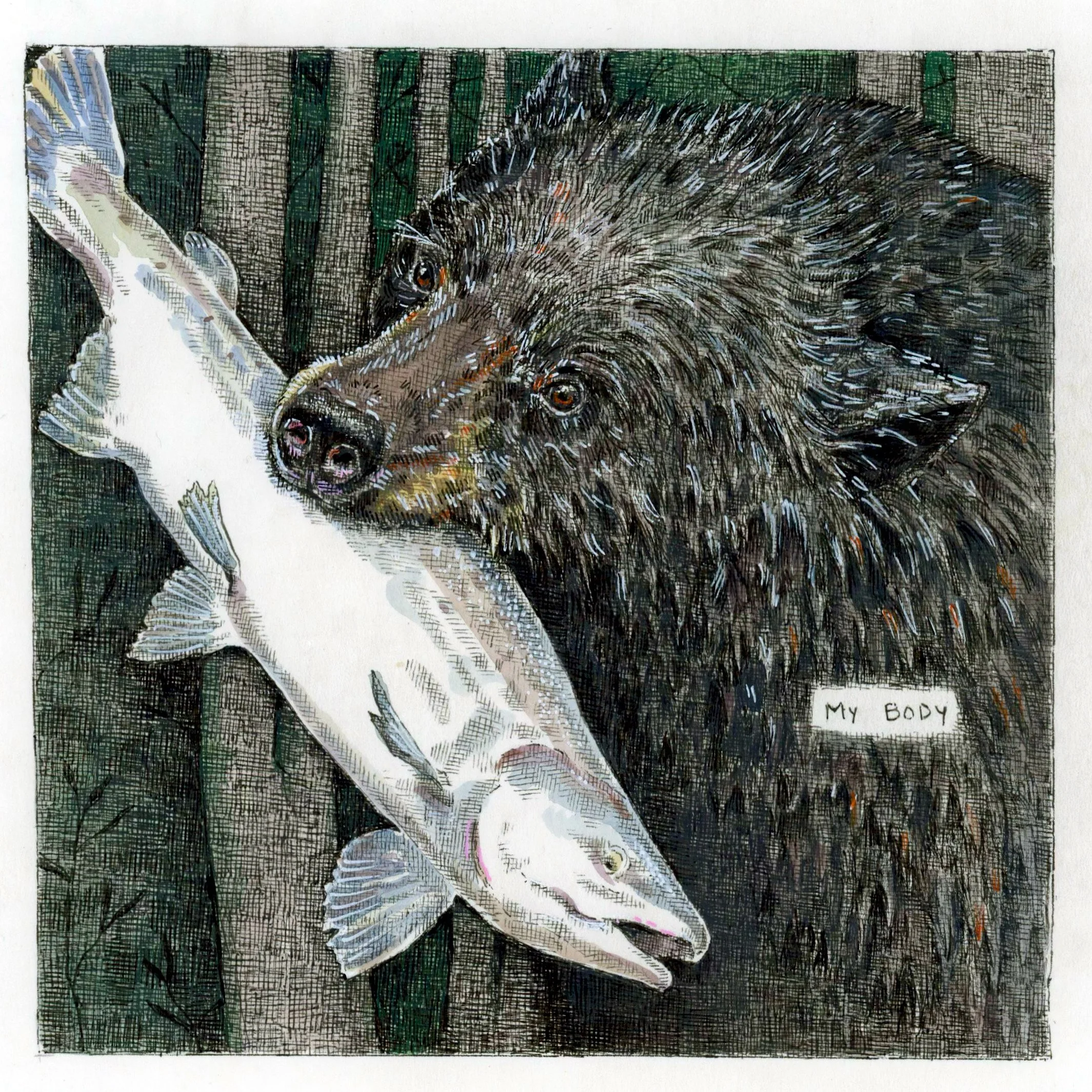
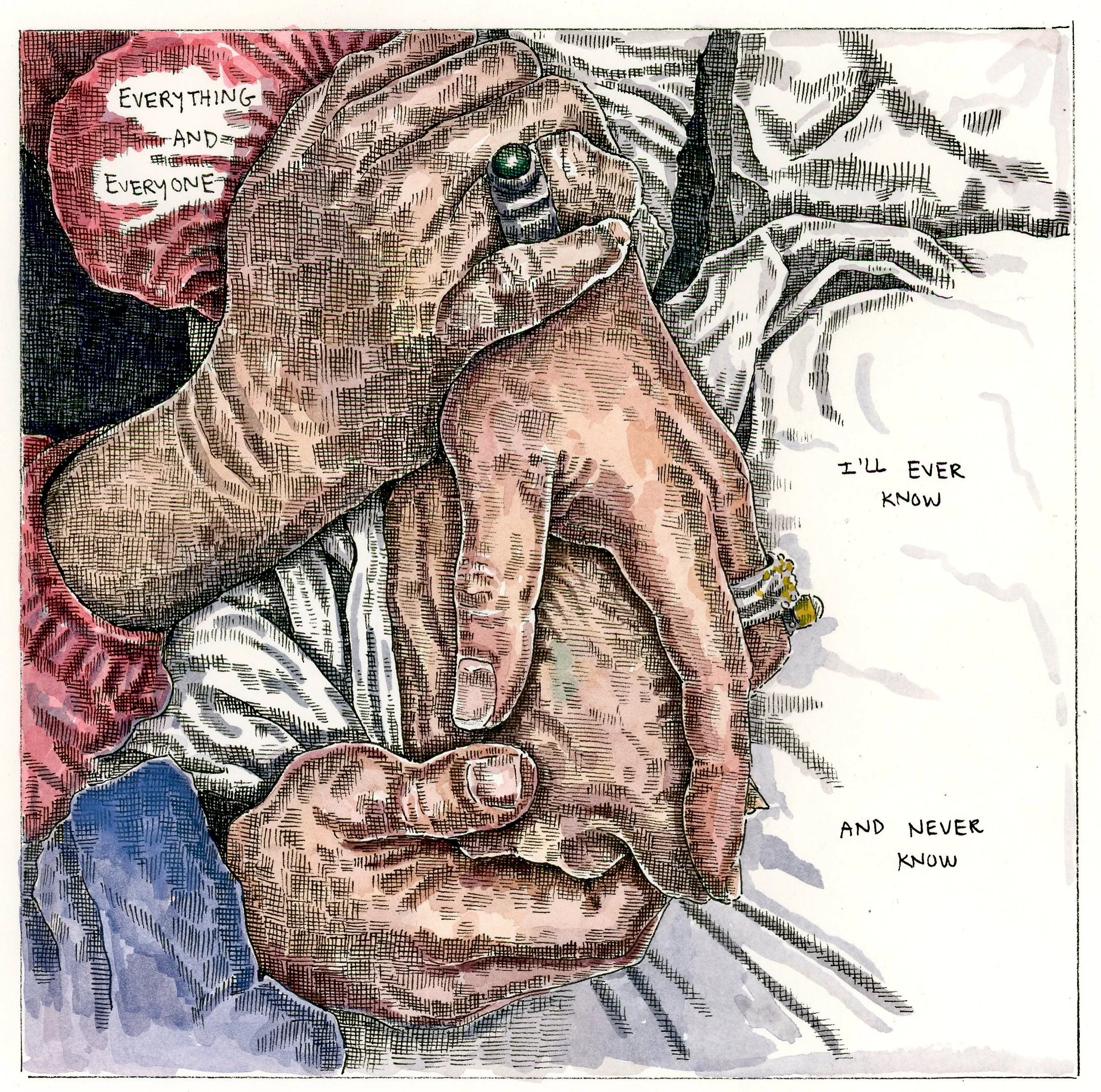


There is new growth happening. I discovered it recently, in a part of my garden where the soil is so compacted, I thought nothing would ever grow.
In ecological terms, the process by which plant and animal species recolonize a landscape after a major disturbance is called secondary succession. This happens after:
Wildfires
Flood events
Hurricanes
Landslides
Lava flows
Human activities
Illnesses
In the Pacific Northwest, one can see examples of areas where secondary succession would naturally occur, if given the opportunity, in the plethora of clearcuts.
After this type of intensive logging, without the typical treatment of pesticides followed by the planting of Douglas fir saplings, one would expect to see grasses and flowers emerge and elk populate the open space. Then sun-loving shrubby plants and the fast growing alder trees and the bears, birds, and insects that seek their shelter and eat their berries. It is last that the conifers return, and the temperate rainforest we know reanimates.
Each early stage of succession brings with it unique qualities that allow for later stages of the process to occur. It is a fine tuned evolutionary strategy, an innate knowledge, the scabbing over of a bloody wound and its dissolution into new flesh.
In our tree plantations, we disrupt this cycle by spraying a cocktail of chemicals, including glyphosate and 2,4-D, on recently clearcut areas. The idea is to prevent “undesirable” trees and shrubs that emerge early in successional processes from competing with the cash crop, Douglas fir.
By overriding the natural successional process, however, several costly externalities are produced:
Pesticides linked to endocrine diseases and cancers runoff into our water sources, and are now showing up in the marine bivalves we eat.
Soil microorganisms and mycorrhizal networks are damaged. Compaction.
Decreased summer stream flow and increased flood events.
The cooperation of a diverse ecosystem, its means to share resources, its defense against extreme weather, diseases and pests, is lost.
The entire ecosystem becomes sickly.
Increased cases of issues in physical and mental health occur.
When I think about my body, I understand it now in this ecological context. Within the microcosm of my own body, my emaciation finds footing in the same monoculture that is killing the spotted owl, the salmon, the orcas.
When I think about my body, the mental illness that consumed it, I understand it now as being relational. What happens to the Douglas fir when placed in an artificial context? Where it is not able to receive essential nutrients from fungi, when it is not watered by the alder’s hydraulic redistribution?
Starvation. Slow growth. An explosion of Swiss needle cast and bark beetles. An attempt to return to equilibrium.
Sometimes decline is necessary for the reemergence.